The gentleman on the left is Frederick the Great. The King of Prussia in the 18th Century.
He was grappling with a peculiar problem. The farmers in his kingdom only grew wheat, making them susceptible to repeated famines. He wanted them to grow potatoes too, which is another great source of carbohydrates. Right from announcing rewards and penalties, he did everything. But nothing worked.
It’s then that he got a brainwave. He designated a small patch of land in his Palace grounds for potato farming. He announced potato as a crop exclusively for the consumption of the royalty and to be consumed only with royal permission. He posted guards on the patch of land. Soon, his subjects got wind of the crop. Some enterprising farmers tried to steal the crops to plant in their own fields. They tried and they succeeded. Unknown to them, the guards had secret orders to allow stealing sometimes. Before long, potato became a crop of choice in Prussia. Even today, it is a staple in what is now known as Germany.
The pic on the right is of hiphop clothing. Some hiphop clothing brands used this insight to allow their customers to steal their clothes from stores as these customers will always be way cooler than the rest. It gave them free publicity when they wore their clothes.
Even some beer brands employed the same tactic to get designer mugs (with their branding) be stolen by customers. It costed them almost nothing to place a permanent advert in their customers’ kitchens.
Can you think of any other brands who employ this strategy? Do comment.
The holy grail of brand stardom is great quality that gets talked about by customers. Yet, there are 3 case studies when it proved detrimental to sales. This is when innovative (or underhand and unethical) measures were brought to play to boost sales.
Case study 1:
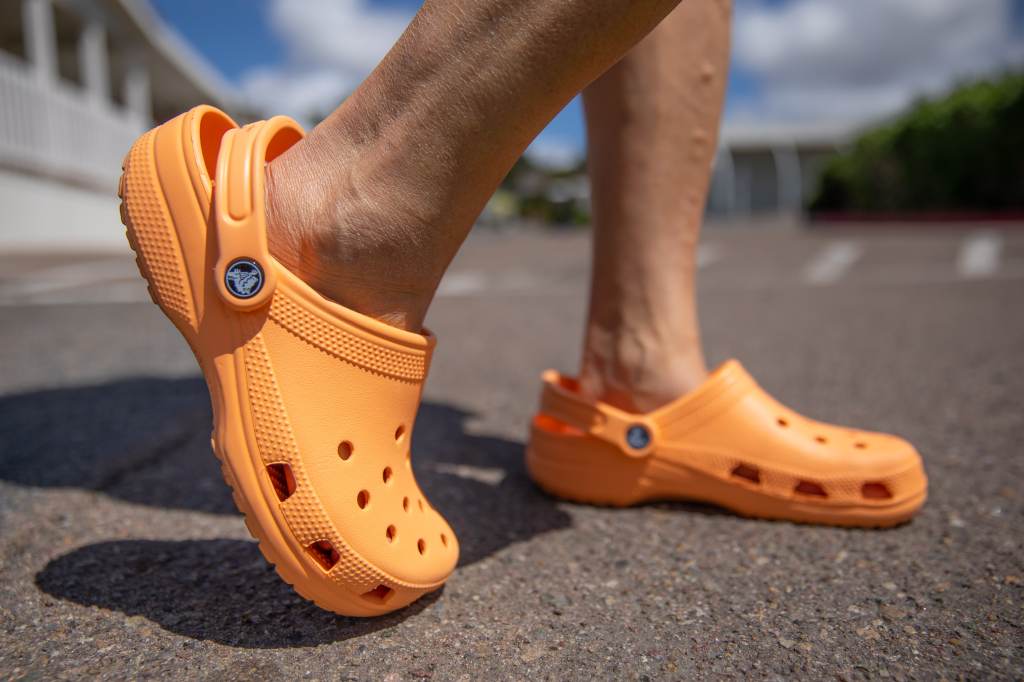
Crocs came face to face with a unique challenge in the early 2010s. Their product quality was so good that people didn’t need to replace their crocs for many many years. They needed to find a solution fast, or the company ran the risk of going under. What did they do? Dilute their product quality? Certainly not! They innovated and introduced charms for their crocs. Those ‘charming’ trinkets that you can attach to your crocs. Now, the buyers could have multiple crocs and personlise them as per the usage. Sales skyrocketed.
Case study 2:
Incadescent bulb industry experienced a sudden plunge in their sales in the early 20th century. They found out that the reason is the exceptional quality of the bulbs which makes them last a long long time. The entire industry collectively decided to downgrade the quality of the bulbs to ensure quicker replacements.
Case study 3:
Tim Cook and Apple acknowledged in December 2017 that they had implemented software updates that deliberately slowed down the performance of older iPhone models.
It’s anybody’s guess what could be the reason behind this underhand move.
Case study 4:
Closer home, the National Green Tribunal banned cars above 15 years on the roads of Delhi/NCR. On the face of it, the reason was to reduce the emission of green house gasses, but let’s consider 2 simple points: 1. Can the same objective be achieved by stringent pollution control norms and stricter punishments for violating those norms? I know of many car owners who take such good care of their cars, it’s impossible to assume that their cars pollute.
2. What about the greenhouse emissions of producing more cars and transporting them to the car showrooms of Delhi?
No wonder, many believe that the hidden reason is the lobbying by the automobile industry to boost the sales of their vehicles which won’t be replaced otherwise because of better quality to comply with road worthiness norms.
What’s your take on this issue? If you faced a similar dilemma with high quality, what would be your approach? Do leave a comment.
Brand Ambassadors can’t really talk and try to convince every potential customer out there. But now, thanks to AI, it’s possible. Well, almost. Take a look at this innovative interactive idea by Titan Eye+. Does it spark a thought about what YOU can do with your brand?
Marketers can draw these 10 valuable lessons from India-Pakistan cricket rivalry to improve their strategies and connect with their audiences effectively:
Leverage Emotional Appeal: India-Pakistan cricket matches evoke intense emotions among fans. Marketers can tap into this emotional connection to their advantage. Understand the emotional triggers of your target audience and create marketing campaigns that resonate with their feelings, whether it’s patriotism, nostalgia, or shared experiences.
Cultural Sensitivity: Respect and understanding of cultural nuances are crucial when marketing to diverse audiences. India and Pakistan are culturally rich and diverse countries, and any insensitivity can lead to backlash. Marketers should invest in cultural research and create campaigns that align with local traditions and values.
Real-time Engagement: Cricket matches are real-time events that captivate people’s attention for several hours. Marketers can learn from this by actively engaging with their audience during live events. This includes running real-time social media campaigns, contests, or discussions that are relevant to the event.
Community Building: Cricket matches bring people together, fostering a sense of community and unity. Marketers can replicate this by creating brand communities where like-minded customers can interact and share experiences. Building a strong community around your brand can enhance loyalty and advocacy.
Content Marketing: Pre-match analysis, post-match reviews, and a constant stream of content around these matches are evident. Marketers can adopt a content marketing strategy to keep their audience engaged and informed. Consistent, high-quality content can position your brand as an authority in your industry.
Influencer Marketing: Both Indian and Pakistani cricketers have massive followings and are considered influencers in their own right. Marketers can partner with relevant influencers to promote their products or services. These influencers can help your brand connect with their dedicated fan bases.
Global Reach: India-Pakistan cricket matches have a global following. For marketers looking to expand internationally, this is a great lesson. Consider tailoring your marketing efforts to appeal to a diverse global audience and leverage international trends and events that resonate with different cultures.
Create Hype: The pre-match anticipation and excitement are an essential part of the India-Pakistan cricket matches. Marketers can build hype around product launches, events, or promotions by teasing and creating anticipation through teasers and sneak peeks.
Real-time Analytics: These matches offer an opportunity for real-time data analysis. Marketers should invest in analytics tools and strategies that allow them to monitor, measure, and adjust their marketing efforts in real-time, maximizing impact.
Inclusive Marketing: India-Pakistan matches draw diverse audiences. Marketers can learn the importance of inclusivity in their campaigns. Ensure your marketing efforts resonate with various demographics, backgrounds, and preferences to reach a broader audience.
The emotional appeal, cultural sensitivity, and real-time engagement strategies are particularly worth emulating. By incorporating these lessons into their marketing strategies, businesses can connect with their target audiences more effectively and create lasting, meaningful relationships with their customers.
Start-up brands face unique challenges in building their reputation and making a name for themselves in the market. In this blog post, I will talk about the three biggest mistakes that start-up brands often make and discuss how to avoid them.
MISTAKE 1: Neglecting Brand Identity and Storytelling
This is perhaps the most common mistake I have encountered in start-up brands. In a rush to launch their products or services, many entrepreneurs underestimate the importance of a strong and cohesive brand identity. Your brand identity encompasses your logo, colors, typography, and the overall design aesthetic. It’s what makes your brand recognizable and memorable.
Similarly, storytelling is crucial in connecting with your target audience. People love to know the story behind a brand – what inspired it, the problem it aims to solve, and the values it holds dear. Neglecting this aspect can lead to a lack of authenticity, making it challenging to build trust with customers.
How to Avoid It:
Invest time and resources in developing a strong and memorable brand identity.
Craft a compelling brand story that resonates with your target audience.
Consistently communicate your brand identity and story across all marketing channels and customer interactions.
MISTAKE 2: Ignoring Market Realities
Market research can help you understand your target audience, their needs, and the competitive landscape. If you do not have the budget for a primary market research (sending out market researchers in the field and collecting data), you should spend a significant amount of time in secondary market research (browsing the web). I myself committed the grave mistake of ignoring this rule for one of my brands. The result? I had to close down that business after 2 years of hard work and expenses.
How to Avoid It:
Get out in the market and talk to your potential customers. Get together with them over tea/coffee/lunch. Understand their needs. Make copious notes and then brainstorm with your friends and marketing experts.
Get on the net and go over the data about your customers – their likes/dislikes and geographical presence.
Make an detailed list of your competitors to assess their strengths and weaknesses.
Continuously monitor the market and adapt your strategies as needed to stay competitive.
MISTAKE 3: Overlooking Digital Marketing
Digital Marketing can offer the most cost-effective marketing channel for your brand. Unfortunately, many start-ups make the mistake of either neglecting digital marketing entirely or not leveraging it to its full potential. Overlooking digital marketing means missing out on a vast audience and the ability to create meaningful connections with potential customers.
How to Avoid It:
Develop a comprehensive digital marketing strategy that includes social media, content marketing, SEO, email marketing, and paid advertising.
Create and maintain an engaging website that reflects your brand’s identity and offers a seamless user experience.
Utilize data analytics to measure the effectiveness of your digital marketing efforts and make data-driven improvements.
By avoiding these 3 mistakes, you can significantly increase your chances of establishing a strong presence in the market. Remember that building a brand takes time and effort, but with a well-thought-out approach and a commitment to learning and adapting, your start-up can thrive in a competitive business landscape.
Yesterday, I was in a brand consultation session (yes, I work on holidays too).
The founder of an upcoming tea brand wanted my advice on the way forward. When I saw the brand name he had coined for the product, I almost winced in pain. There, in front of me was the classic name coining mistake many brand owners too.
A great brand name has an emotional connection with the customer. It has a compelling story with the customer at the centre of it. And it does so in a simple, engaging manner.
But at the very least, a brand name should should have this USP: 1. It should be easy to UNDERSTAND 2. It should be easy to SPELL 3. It should be easy to PRONOUNCE
Why are these 3 parameters the absolute basic? Simply because in the beginning, the success of brands, specially of cash strapped start ups, depends a lot on the most cost effecting marketing channel – Word Of Mouth. And if the brand name can’t be understood, or spelt or pronounced correctly, it’s like a baseball batter getting 3 strikes and walking back to the dugout.
The brand name that stared back at me from that packaging failed on all three counts. I cleared my throat and made my opinion clear and advised him to get back to the drawing board.
I am keeping my fingers crossed and hoping that he has not fallen hopelessly in love with the name (it happens and is one of the biggest reasons why even promising launches turn into duds)
Remember the golden rule in branding – If you confuse, you lose!
Have you come across similar brand name fiascos? Do share in the comments.
One of the things I am often asked about is how exactly to objectively measure Brand Success, when in fact it is such a subjective matter. In this blogpost, I will try to demystify how we at the monks go about measuring Brand Success.
You see, Brand Success is more than just a thriving logo or a catchy slogan. It’s about the emotional connections you forge with your customers, the value you provide, and the impact you have on your target audience. But how can you measure something as abstract as brand success? Let’s dive into the key metrics and strategies to help you gauge the effectiveness of your branding efforts.
DEFINING BRAND SUCCESS
Before we dive into measuring brand success, let’s clarify what it means. Brand success encompasses various aspects, including:
Brand Awareness: How well is your brand recognized by your target audience?
Brand Loyalty: Are customers loyal to your brand, and do they return for more?
Perceived Value: What do customers associate with your brand in terms of quality, reliability, and credibility?
Customer Engagement: How actively do customers engage with your brand through social media, reviews, and other channels?
Market Share: How does your brand’s market share compare to competitors?
Financial Performance: Is your branding positively impacting your revenue, sales, and profitability?
HOW TO MEASURE BRAND SUCCESS
With these aspects in mind, let’s explore how to measure brand success effectively.
BRAND AWARENESS METRICS
Brand Recognition: Conduct surveys to measure the percentage of people who recognize your brand. Social Media Reach: Analyze the growth of your social media followers and the reach of your posts. Website Traffic: Monitor website traffic and track the number of unique visitors.
BRAND LOYALTY METRICS
Customer Retention Rate: Calculate the percentage of customers who continue to purchase from your brand. Net Promoter Score (NPS): Measure customer loyalty by asking them how likely they are to recommend your brand to others. Repeat Purchase Rate: Determine the frequency at which customers make repeat purchases.
PERCEIVED VALUE METRICS
Customer Surveys: Collect feedback on perceived quality, reliability, and credibility. Online Reviews and Ratings: Monitor and respond to online reviews and ratings to maintain a positive brand image.
CUSTOMER ENGAGEMENT METRICS
Social Media Engagement: Analyze likes, shares, comments, and click-through rates on your social media posts. Email Marketing Metrics: Track open rates, click-through rates, and conversion rates for email campaigns. Content Engagement: Measure the engagement levels of your blog posts, videos, and other content.
MARKET SHARE METRICS
Market Research: Conduct regular market research to assess your market share relative to competitors. Sales Data: Analyze sales data to determine your brand’s share of the market.
FINANCIAL PERFORMANCE METRICS
Revenue Growth: Monitor year-over-year revenue growth attributed to branding efforts. Profitability: Assess whether branding initiatives are positively impacting profit margins.
TOOLS AND STRATEGIES FOR MEASUREMENT
To effectively measure brand success, consider using a combination of tools and strategies, including:
Analytics Platforms: Utilize tools like Google Analytics, social media insights, and email marketing platforms to track relevant metrics.
Surveys and Feedback: Gather feedback from customers through surveys, focus groups, and customer interviews.
Competitor Analysis: Compare your brand’s performance with that of your competitors to assess market share and positioning.
Brand Monitoring Tools: Use tools like Mention or Brandwatch to monitor online mentions and sentiment around your brand.
Customer Relationship Management (CRM) Software: Implement CRM software to track customer interactions and loyalty.
Measuring brand success is a complex but essential task for any business looking to thrive in a competitive market. By defining your goals, selecting the right metrics, and using appropriate tools, you can gain valuable insights into how well your branding efforts are performing. Remember that brand success is an ongoing journey, and continuous measurement and adjustment are key to maintaining and improving your brand’s standing in the eyes of your audience.
The brand story of Mercedes-Benz is a tale of innovation, luxury, and engineering excellence that has spanned over a century. Before I come to the 3 key lessons from it, here it is in short:
The Birth of Mercedes-Benz: Mercedes-Benz can trace its origins back to the late 19th century. In 1886, Karl Benz invented the world’s first gasoline-powered car, the Benz Patent-Motorwagen. Meanwhile, in 1888, Gottlieb Daimler and Wilhelm Maybach created the first four-stroke engine. These pioneering inventors laid the groundwork for the future of the automobile industry.
Mercedes: The Name and the Symbol: The brand name “Mercedes” was inspired by the daughter of Emil Jellinek, an automobile enthusiast and early Mercedes-Benz customer. Jellinek played a significant role in the development and marketing of Daimler-Motoren-Gesellschaft (DMG) cars, which later merged with Benz & Cie. to form Mercedes-Benz. The three-pointed star logo of Mercedes-Benz symbolizes the brand’s ambition to dominate land, sea, and air transportation.
Innovation and Engineering Excellence: Throughout its history, Mercedes-Benz has been at the forefront of automotive innovation. They introduced the first production car with a supercharged engine, pioneered safety features like the crumple zone and anti-lock brakes, and produced the first diesel-powered passenger car. Their commitment to engineering excellence and cutting-edge technology has been a hallmark of the brand.
Luxury and Performance: Mercedes-Benz has built a reputation for luxury and performance. Their vehicles are known for their elegant design, high-quality materials, and advanced features. Models like the S-Class have consistently set the standard for luxury sedans, while Mercedes-AMG has become synonymous with high-performance driving.
Racing Heritage: Mercedes-Benz has a rich racing heritage, dating back to the early 20th century. They achieved success in events like the Grand Prix and the Le Mans 24-hour race. The Silver Arrows, a name given to their racing cars due to their silver color, are legendary in the world of motorsports.
Global Presence: Mercedes-Benz has a global presence, with manufacturing facilities, research and development centers, and a vast network of dealerships around the world. This global reach has made it a leading luxury car brand.
Innovation for the Future: Mercedes-Benz is at the forefront of the electric vehicle (EV) revolution, with a commitment to sustainable mobility. Their EQ brand represents their electric vehicle lineup, and they continue to invest in autonomous driving technology and connectivity features.
And now, as promised, the 3 key takeaways from the Mercedes Brand Story. You can implement these for your own brand:
Know your WHY: Be absolutely clear why your brand exists. What need of the customer is it trying to meet. The need can be logical or emotional. Ideally, it should be a mix of both, with the emphasis on the emotional.
Visual Identity: Is the “why” of your brand interpreted well in your logo? Are you consistent enough to drive the “why” through your design and content? (The design here means not just the communication but includes packaging and even product design)
The thread that ties your past, present and future: Notice how the Mercedes brand story seamlessly ties in its proud heritage – how it came about, the story of its name and the logo. It also showcases the brand’s obsession with Luxury and Performance. And to round it off, the grand vision for the future.
It doesn’t matter how “small” your brand is. It doesn’t even matter if you’re in the Business to Business Category. You too can create a compelling, engaging story for your brand. This will go a long way to create a stronger connect with your customers. Do drop in a comment if you’d like a professional branding agency to help you out.
I hope you have already seen the new Air India logo by now.
So how does it rate compared to the old logo?
Here are the 4 S’s of logo assessment that we use at the monks:
Symbolism: In the old logo, the flying swan symbolized the lightness and grace of flight, freedom, and independence. The Konark wheel inside the swan is a symbol of Indian culture and represented the wheel of time, the solar symbol. The new logo on the other hand is inspired by the peak of the gold window frame, signifying limitless possibilities, progressiveness, and the airline’s bold, confident outlook for the future. My Score: Old logo – 6/10, New logo – 5/10
Story: The Old Logo talked about the tradition and culture of India. The New Logo tells the story of a country proud of its past yet confident about its future. My Score: Old logo – 7/10, New logo – 7/10
Script: The old logo used an outdated font in its effort to appear traditional. For the new logo, a customised font has been created which beautifully captures the past and future aspects. (The font has been named Air India Sans) My Score: Old logo – 3/10, New logo – 8/10
Simplicity: This is perhaps the most important aspect to look for in a logo. This is where the power of design comes from. The simpler the design, the more powerful it is. The Old Logo had more than one graphic elements put together. It was almost as if a committee had sat on it and arrived at a compromise solution to please 2 different demands (I won’t be surprised, if that actually was the case, it being a government held entity at that time.) The New Logo talks about 2 things (past and future). But it does so elegantly and simply with a single graphic of half a window (would that be counted as half a graphic?). This makes it pack an extra punch My Score: Old logo – 4/10, New logo – 9/10
Final Score as per me Old logo: 5/10 New logo: 7.25/10
Yesterday, I was watching a Ted Talk by Barry Schwartz – The Paradox of Choice. In it, he bursts one of the most closely held beliefs of the Western Society – Welfare and happiness of people can come from giving them more choice. He points to evidence that runs counter to it.
He quotes a case study of the big mutual fund company Vanguard. It has about a million employees and about 2,000 different workplaces. It was found that for every 10 mutual funds the employer offered, rate of participation went down two percent. If 50 funds were offered, 10 percent fewer employees participated than if only five were offered. Why? Because with 50 funds to choose from, it’s so damn hard to decide which fund to choose, that the employees just put it off till tomorrow. Foregoing the matching contribution by the employer and all the benefits of the mutual fund, any mutual fund they might have chosen.
Counter-intuitively, more choice can also lead to less happy customer. Whereas with fewer choices, even in the odd chance that the choice proved wrong, he could always blame the company or quality or just plain luck. With a plethora of choices, if the choice proves wrong, he only has himself to blame. And if it proves good, he will still be left with a nagging feeling that perhaps there was an even better choice out there.
My take is that unless you’re in the fashion business and you NEED to stock a whole range of styles to suit personal tastes, take a leaf out of the book of iPhone – offer a handful of choices with clear distinction between them. iPhone not only offers few choices, they also have another trick up their sleeve – the price these choices in such a way that the customer chooses the option that the company wants them to… But that’s another blogpost.
(Do like, comment and share this post. It keeps me going.)











 sellingtothesouldotcom